



Choosing the right heating system is one of the biggest decisions for homeowners looking to improve comfort and reduce energy bills. Two of the most popular options in UK homes are traditional radiators and underfloor heating. Both can heat your property effectively, but which is more efficient – and which is right for your home in Bracknell, Wokingham, Crowthorne or the surrounding areas?
In this guide, we compare efficiency, running costs, comfort, installation, and suitability to help you make an informed choice.
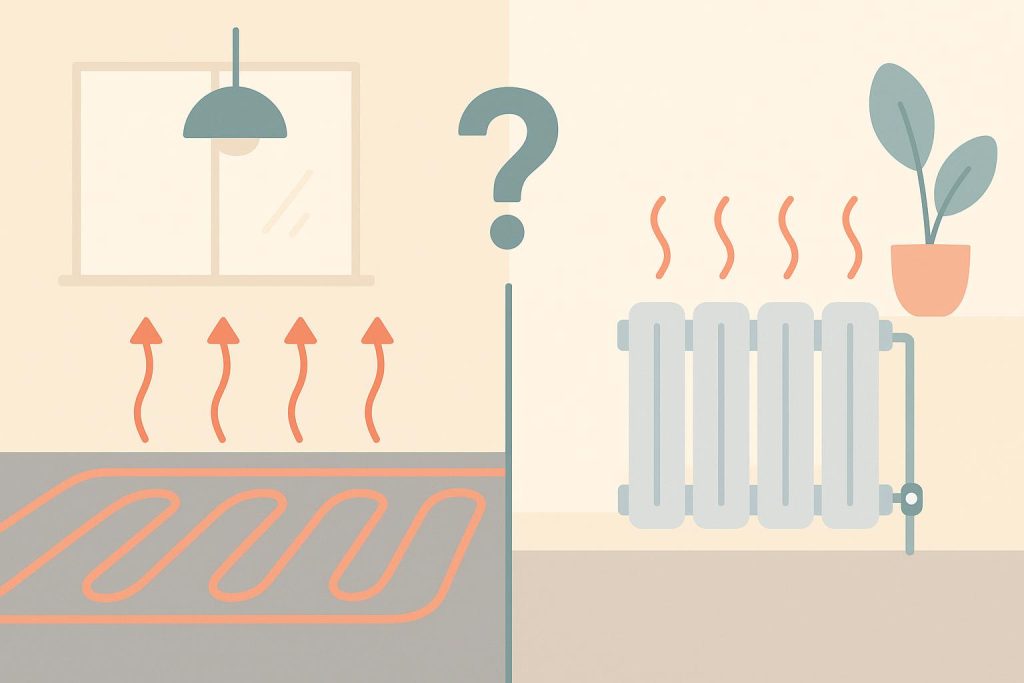
How Radiators Work
Radiators heat rooms by circulating hot water from your boiler through metal panels. The heat is then released into the room mainly through convection (warm air rising) and radiation.
Typical flow temperature:
Radiators usually require water temperatures of 60–75°C to heat rooms effectively.
Pros of radiators:
- Lower upfront installation cost
- Quick to heat up rooms
- Works well with most existing boiler systems
- Easy to replace or upgrade
- Suitable for retrofitting into existing homes
Cons of radiators:
- Less even heat distribution
- Hot spots near radiators, cooler areas elsewhere
- Takes up wall space
- Higher operating temperatures reduce efficiency with modern boilers and heat pumps
How Underfloor Heating Works
Underfloor heating (UFH) uses either warm water pipes (wet systems) or electric heating cables installed beneath the floor. Heat rises evenly from the floor, warming the room from the ground up.
Typical flow temperature:
Underfloor heating operates at 30–45°C, much lower than radiators.
Pros of underfloor heating:
- More even heat distribution
- Lower operating temperature = higher efficiency
- Ideal for modern condensing boilers and heat pumps
- Improved comfort (warm floors, no cold spots)
- Frees up wall space
- Silent operation
Cons of underfloor heating:
- Higher upfront installation cost
- More disruptive to install in existing homes
- Slower heat-up times
- Repairs can be more complex
- Floor coverings must be compatible
Which Is More Energy Efficient?
Underfloor heating is generally more efficient than radiators, especially when paired with modern heating systems.
Here’s why:
1. Lower Water Temperatures = Higher Efficiency
Modern boilers and heat pumps work most efficiently at lower temperatures. Underfloor heating runs at around half the temperature of radiators, which reduces heat loss and improves overall system efficiency.
2. Even Heat Distribution
Underfloor heating warms the entire floor area, meaning rooms feel comfortable at lower thermostat settings. Many homeowners find they can reduce their room temperature by 1–2°C and still feel warm — which can cut heating bills by up to 10%.
3. Better Compatibility with Heat Pumps
If you’re considering renewable heating, underfloor heating is ideal. Heat pumps perform best with low-temperature systems, making UFH far more efficient than radiators in these setups.
Verdict on efficiency:
✔ Underfloor heating is more efficient over time
✔ Radiators are still efficient when correctly sized and installed
✔ The biggest efficiency gains come from good insulation, regardless of system type
Running Costs: Which Is Cheaper to Run?
Running costs depend on:
- Property size
- Insulation quality
- Heat source (gas boiler, heat pump, electric)
- Usage habits
In well-insulated homes, underfloor heating often costs less to run because:
- It operates at lower temperatures
- Rooms stay warm for longer due to heat retention in the floor
- It works efficiently with modern boilers and heat pumps
Radiators can still be cost-effective, particularly in smaller or older homes where UFH installation would be disruptive or expensive.
Installation Costs & Practicality
Radiators
Radiators are usually cheaper and easier to install, especially in existing properties. Replacing old radiators with modern, efficient models can also improve performance without major disruption.
Best for:
- Existing homes
- Renovations without new floors
- Lower budgets
- Quick upgrades
Underfloor Heating
UFH is more expensive to install and often involves lifting floors. It’s most cost-effective when installed during:
- New builds
- Extensions
- Full refurbishments
- Kitchen or bathroom renovations
Best for:
- New builds
- Major renovations
- Ground floors
- Open-plan spaces
- Homes using heat pumps
Comfort Comparison
Underfloor heating provides a more comfortable heat profile:
- Warm feet
- Even room temperature
- No cold draughts
- No visible heating units
Radiators heat rooms faster, which is useful for:
- Spare rooms
- Home offices
- Rooms used intermittently
Which Should You Choose?
Choose Radiators If:
- You’re upgrading an existing system
- You want lower upfront costs
- You need fast heat-up times
- You’re not changing flooring
- Your home has limited floor depth
Choose Underfloor Heating If:
- You’re building or renovating
- You want maximum efficiency
- You’re installing a heat pump
- You prefer even, gentle heat
- You want more wall space
The Honest Answer
Underfloor heating is more energy efficient overall, especially in modern, well-insulated homes and when paired with renewable heating systems. However, radiators remain a practical, cost-effective solution for many properties — particularly when upgrading existing systems.
The best choice depends on your budget, property layout, renovation plans, and long-term goals.
Professional Advice in Bracknell & Surrounding Areas
At Bracknell Plumbing & Heating LLP, we design and install both radiator systems and underfloor heating across:
Bracknell • Wokingham • Crowthorne • Camberley • Maidenhead • Reading • Lightwater • Farnborough • Henley and surrounding areas.
We’ll assess:
✔ Your insulation
✔ Your heat source
✔ Room layouts
✔ Running cost priorities
✔ Budget
👉 Book a heating consultation today
📞 Call 01344 851023
📧 Or contact us online to discuss your options