


A water softener is genuinely worth considering if you’re in a hard water area, since it reduces the limescale that builds up in kettles, taps, shower heads, and inside your boiler and central heating system over time. It’s not essential for every home, but in areas with harder water it can make a real difference to how long appliances last and how efficiently your heating system runs. Whether it’s worth it for you depends on how hard your water actually is and how much the upkeep suits your household.
Is Berkshire a hard water area?
Much of Berkshire, along with large parts of the South East, sits within the UK’s hard water belt, largely down to the chalk geology much of the region’s water passes through. Hardness varies street to street depending on the exact source, but if you’ve noticed limescale building up quickly on taps, kettles need descaling often, or shower screens never quite come up streak-free, that’s usually a sign you’re dealing with harder water than average.
What does hard water actually do to your home?
Hard water contains higher levels of dissolved minerals, mainly calcium and magnesium, and when that water is heated, those minerals form limescale. It’s the same process whether it’s happening in a kettle or inside a boiler’s heat exchanger.
The visible signs are the annoying ones: white scale on taps and shower heads, cloudy marks on glassware, and kettles that need descaling every few weeks. The less visible cost is what it does inside your heating system, where limescale can coat the inside of pipework and the boiler’s heat exchanger, making the system work harder to heat the same amount of water.
What does a water softener actually do?
A water softener works through ion exchange, swapping out the calcium and magnesium in your water for sodium ions as it passes through a tank of resin. The resin gets periodically recharged with salt, which is why softeners need topping up.
Once installed, every tap fed by the softened supply delivers water with far less scale-forming mineral content, so the limescale problem is addressed at the source rather than scrubbed off afterwards.
The benefits of a water softener
For homes in genuinely hard water areas, the benefits tend to show up in a few places:
- Less limescale building up on taps, shower heads, and glassware
- Appliances like kettles, washing machines, and dishwashers often last longer with less internal scale buildup
- A boiler and heating system protected from new scale forming on the heat exchanger, which can help it run efficiently over the long term
- Soap and shampoo lather more easily in softened water, which many people notice as softer skin and hair
- Less scrubbing generally, since limescale marks are far less persistent
What to weigh up before getting one
It’s not a decision to make without considering the practical side too:
- There’s an upfront cost for the unit and installation, plus ongoing salt for the resin tank
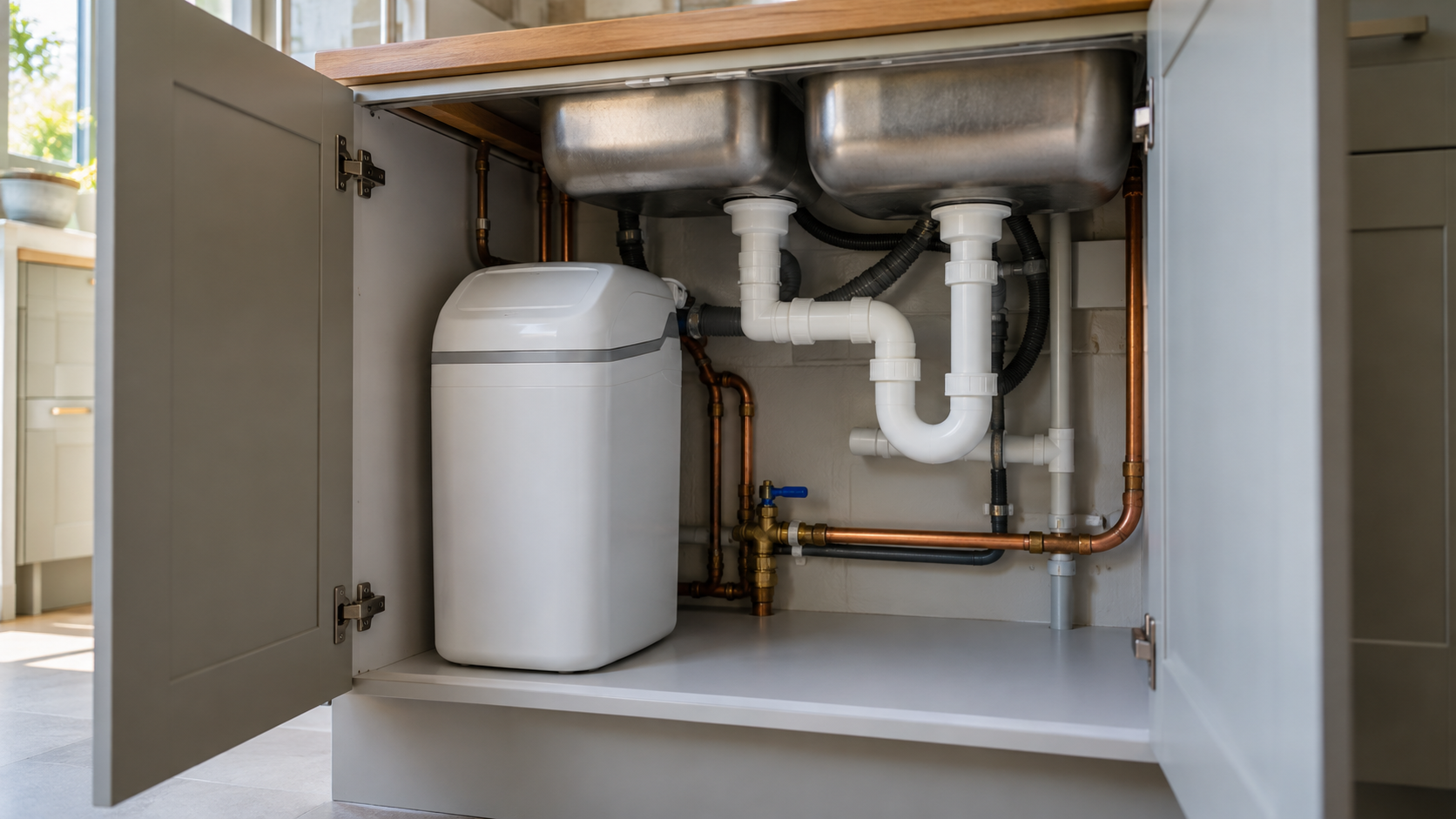
- It needs space, usually under the sink or in a utility area, and access to plumb it into the mains
- Softened water has a small amount of added sodium, worth bearing in mind if anyone in the household is on a sodium-restricted diet, though many homes simply keep one unsoftened tap for drinking and cooking
- A softener protects against new limescale, but it won’t undo scale that’s already built up inside old pipework or a boiler that’s been running in hard water for years without one
Water softener vs power flush: they solve different problems
These two often get confused, but they’re not interchangeable. A water softener is preventative. It stops new limescale forming going forward. A power flush is corrective. It clears sludge and scale that’s already built up inside an existing central heating system.
If your heating system has been running for years without a softener and you’re already seeing symptoms like cold radiator patches or a noisy boiler, a power flush addresses the existing problem. A softener installed afterwards helps stop it building back up again. Doing one without the other only solves half the picture.
Frequently asked questions
Do I need a plumber to install a water softener?
Yes, in most cases. It needs to be plumbed into the mains, usually near the stopcock, and it’s worth having it done properly rather than as a DIY job.
Will a water softener fix my noisy boiler?
Not on its own. A softener prevents new scale from forming, but it won’t clear scale or sludge that’s already inside the system. That usually needs a power flush first.
Is softened water safe to drink?
Generally yes, though it does contain slightly more sodium. Plenty of households keep one unsoftened kitchen tap for drinking and cooking, particularly if someone in the home needs to watch their sodium intake.
Not sure if it’s worth it for your home?
If you’re weighing up whether a softener makes sense, or you suspect years of hard water have already left scale inside your heating system, it’s worth having your setup looked at properly rather than guessing. We work on central heating systems across Yateley, Woodley and the surrounding areas. Get in touch and we can talk through what would actually help.