



A radiator that won’t heat up properly is nearly always down to one of two things: trapped air, or sludge sitting inside the system. The good news is that where the cold patch sits usually tells you which one you’re dealing with. Cold at the top generally means air, and bleeding the radiator sorts it in minutes. Cold at the bottom, or in patches across the middle, usually points to debris in your central heating system, which needs a bit more than a radiator key to fix.
Why is my radiator cold at the top?
This is the classic sign of trapped air. As your heating system runs, small amounts of air can work their way in and rise to the top of each radiator, since air is lighter than the water circulating around the system. That pocket of air stops hot water reaching the top section, so the bottom of the radiator warms up fine while the top stays stubbornly cold.
It’s harmless, common, and the easiest of all radiator problems to fix yourself.
How to bleed a radiator
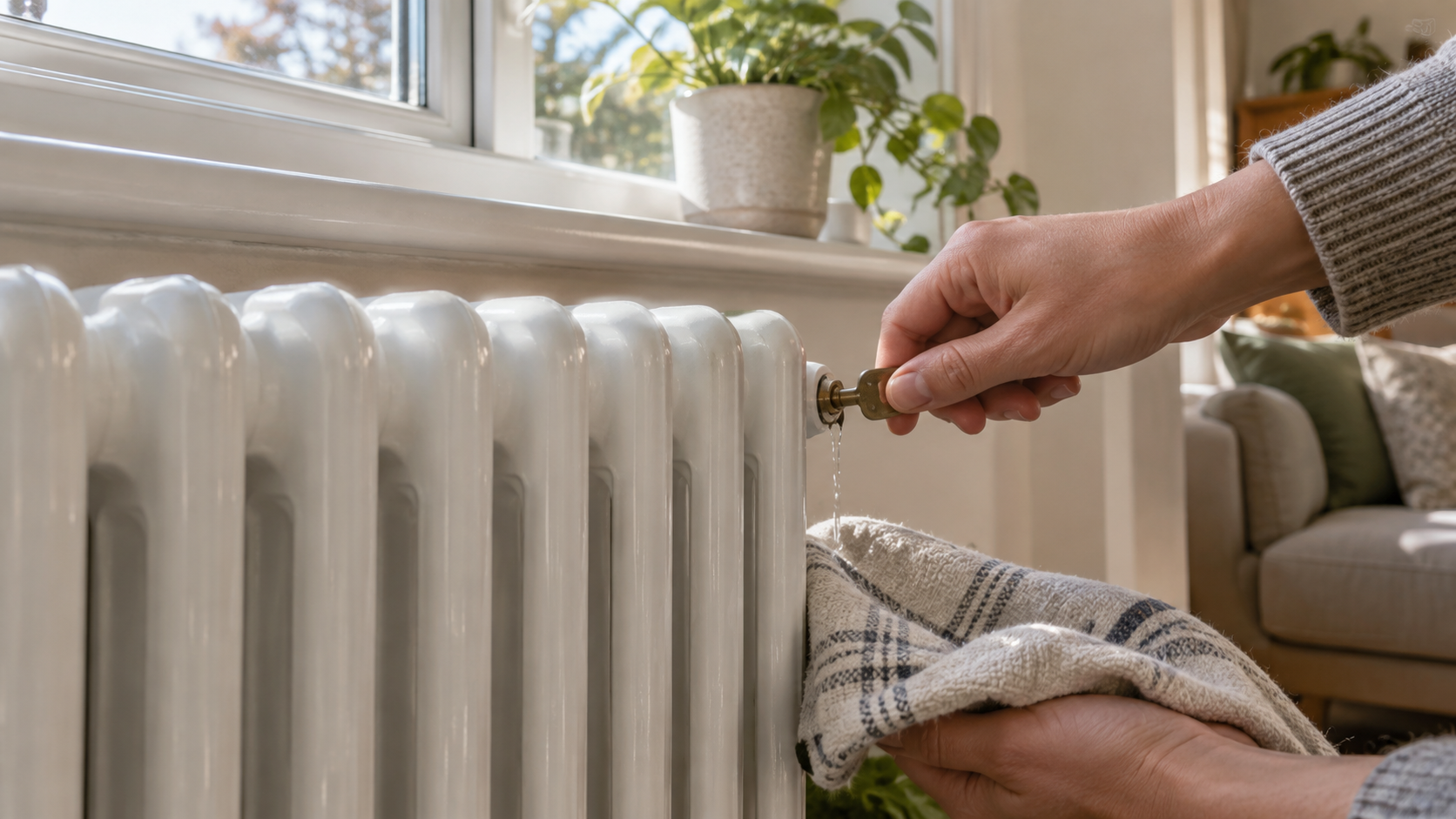
Bleeding a radiator takes a few minutes and doesn’t require any tools beyond a radiator key, which is cheap and widely available. Here’s how to do it:
- Turn your heating off and let the radiators cool down first, so you’re not dealing with hot water under pressure
- Find the bleed valve, a small square fitting usually at one top corner of the radiator
- Hold a cloth underneath it, then turn the valve slowly anti-clockwise with the radiator key
- Listen for a hissing sound, that’s the trapped air escaping
- As soon as the hiss stops and water starts to dribble out, close the valve again promptly
- Once you’ve bled every radiator in the house, check your boiler pressure and top it up if it’s dropped below the normal range
Work through radiators one at a time rather than all at once, and check the boiler pressure gauge again once you’re done, since bleeding several radiators can drop it noticeably.
Why is my radiator cold at the bottom?
This one’s less straightforward, and bleeding won’t fix it. A radiator cold at the bottom, or across a patch in the middle, is usually caused by sludge, a mix of rust and mineral debris that settles at the bottom of the radiator over time and blocks water from circulating properly through that section.
Older systems, and homes that have never had a power flush, are the most likely to see this. If several radiators across the house are affected rather than just one, it’s often a sign the whole system needs attention rather than a single radiator. That’s the point where a power flush tends to make more sense than bleeding, since it clears the debris out of the whole system rather than just the symptom in one radiator.
Cold patches that aren’t at the top or bottom
Patchy cold spots in the middle of a radiator, rather than a clean line at the top or bottom, are usually the same sludge problem, just distributed unevenly. It can look confusing because the pattern doesn’t match the neat “cold at the top” or “cold at the bottom” rule, but the underlying cause and fix are the same.
When to call an engineer instead of doing it yourself
Bleeding a radiator is genuinely fine to do yourself, and there’s no gas or appliance internals involved, so it’s low risk. Where it’s worth calling in a professional is when bleeding doesn’t fix the problem, when your boiler pressure keeps dropping and needs regular topping up, or when several radiators across the house are affected at once.
Those situations usually point to something in the wider system, whether that’s sludge buildup, a failing valve, or an issue with the boiler itself, and it’s worth getting a proper look at central heating and boiler servicing rather than guessing further.
Frequently asked questions
How often should I bleed my radiators?
Once a year is a sensible default, ideally just before the heating season starts. Bleed sooner if you notice cold spots or gurgling before that.
Can I bleed a radiator myself?
Yes. It’s a straightforward job with a radiator key, and it doesn’t involve gas connections or anything inside the boiler itself.
Do all cold radiators need a power flush?
No. Cold at the top is almost always just air, sorted by bleeding. A power flush becomes relevant when the problem is cold at the bottom or in patches, which points to sludge rather than air.
Getting your heating properly sorted before winter
If you’ve bled every radiator in the house and one or two are still stubbornly cold, or your boiler pressure keeps creeping down, it’s worth getting it looked at properly before the cold weather really sets in rather than fighting the same radiator every few weeks.
We help homeowners keep their heating running properly across Sandhurst, Binfield and the surrounding areas. If bleeding hasn’t fixed it, get in touch and we’ll take a proper look.