


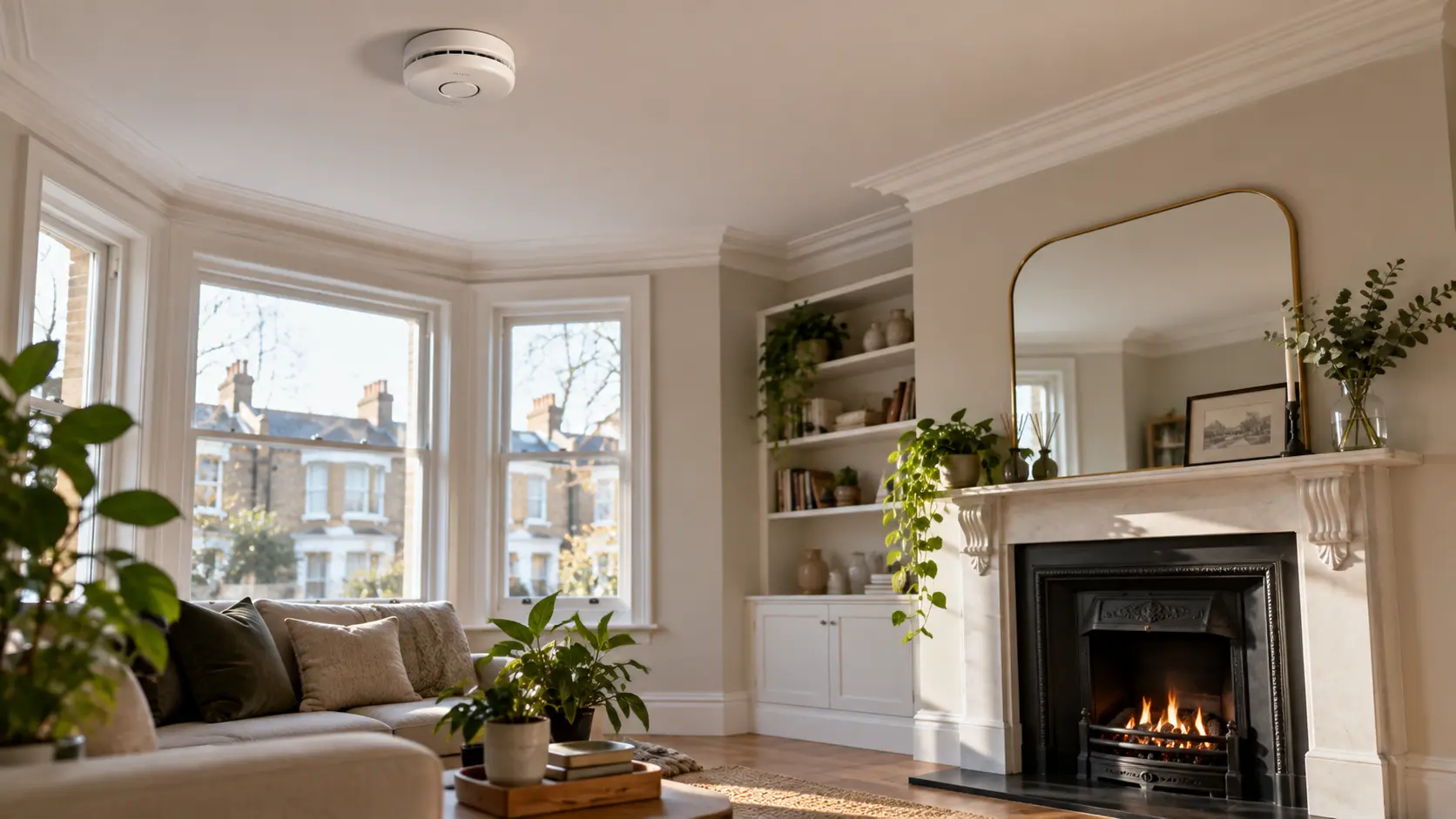
Most homes are safer with mains-wired, interlinked smoke and heat alarms. When one goes off, they all go off, and they don’t rely on someone remembering to change a battery. For most existing homes they aren’t a legal requirement, but they’re usually required in new builds, loft conversions and some extensions. Battery alarms are much better than nothing, but mains-wired alarms give more reliable cover. Our electrical services include fitting smoke detectors in homes around Bracknell.
Smoke alarm or heat alarm: what’s the difference?
- Smoke alarms detect smoke particles. They’re best for hallways, landings and living areas, where a fire can start and spread before anyone notices.
- Heat alarms detect a rapid rise in temperature. They’re designed for kitchens, where cooking fumes would set off a smoke alarm constantly.
Putting a smoke alarm in the kitchen usually leads to people taking the battery out. A heat alarm avoids that problem.
Mains-wired vs battery alarms
| Mains-wired alarms | Battery-only alarms | |
|---|---|---|
| Power | Mains supply with a backup battery | Battery only |
| Interlinking | Usually interlinked, so all sound together | Often standalone; some wireless interlink models |
| Maintenance | Backup battery on some models | Regular battery changes |
| Installation | Electrician required | DIY friendly |
| Reliability | High, as there’s no reliance on batteries | Depends on batteries being changed |
Interlinking is the big advantage. If a fire starts in the kitchen at night, an alarm on the landing sounds straight away, not minutes later when smoke reaches it.
When are they required?
For owner-occupied homes in England, there’s no general law saying existing homes must have mains-wired alarms. However:
- New builds and some major building work, such as loft conversions or certain extensions, usually need mains-powered, interlinked alarms under the Building Regulations
- Landlords have their own legal duties on smoke and carbon monoxide alarms in rented homes
If you’re planning building work, your builder or building control will confirm what’s needed.
Where to fit them
A typical setup includes:
- A smoke alarm in the hallway at the bottom of the stairs
- A smoke alarm on each landing
- A heat alarm in the kitchen
- A smoke alarm in the main living room
- Smoke alarms in bedrooms, for extra protection
Alarms should be fitted on the ceiling, away from walls, corners and light fittings, and not right next to bathrooms, where steam can cause false alarms. The manufacturer’s instructions give the exact spacing.
Testing and replacing your alarms
- Test every alarm monthly by pressing the test button
- Vacuum or dust them occasionally to stop dust building up in the sensor
- Replace them when they reach the end of their life. Most alarms show an expiry date, and many manufacturers recommend replacing them after around 10 years.
If an alarm chirps, it usually means a low backup battery or that it’s reached the end of its life.
Fire safety in Bracknell homes
Many homes around Bracknell, Wokingham and Crowthorne have had loft conversions, garage conversions or kitchen extensions added over the years. It’s common to find the original battery alarms left in place, with nothing covering the new rooms. When you’re having electrical work done, it’s a good time to bring the alarms up to date. Our guide to electrical safety at home has more simple safety tips.
Frequently asked questions
Do mains-wired smoke alarms work in a power cut?
Yes, as long as the backup battery is working. Most mains-wired alarms have a backup battery for exactly this reason.
Can I fit mains-wired smoke alarms myself?
No. They need a new or extended circuit, which should be installed by a qualified electrician. Battery alarms are fine to fit yourself.
How many smoke alarms do I need?
At least one on every storey is a sensible minimum, with a heat alarm in the kitchen. Larger homes, or homes with extra rooms, need more.
Should I also have a carbon monoxide alarm?
If you have a gas boiler, gas fire or wood burner, yes. A CO alarm detects a gas that smoke alarms can’t.
Want your alarms brought up to date?
If you’d like mains-wired smoke and heat alarms fitted, give us a call on 01344 851023 or drop us a message and we’ll come and work out what your home needs.