



The easiest way to stop your pipes freezing this winter is to catch the exposed ones now, before the first proper cold snap hits, rather than after. Loft pipes, outside taps and anything running through an unheated garage are the usual culprits. A bit of insulation and a few sensible habits can save you a burst pipe, a flooded kitchen, and a call to an emergency plumber in the middle of January. Here’s what actually works, and what to do if you’re reading this because a pipe has already frozen.
Already dealing with a burst pipe? Turn off your stopcock first, then switch off the electrics if water’s anywhere near sockets or the fuse board. Sort the emergency, then come back to the prevention advice below once things are dry.
Why do pipes freeze in the first place?
Water expands as it freezes, and pipework isn’t built to flex with it. Once ice forms inside a pipe, pressure builds behind the blockage, and that’s usually what causes a split, not the ice itself.
The pipes most at risk are the ones outside the heated part of your home. Think lofts, garages, under-floor voids near outside walls, and outdoor taps. If a pipe runs somewhere you wouldn’t want to sit for long in December, it’s a candidate for freezing.
How to stop your pipes freezing this winter
A handful of straightforward steps make a real difference:
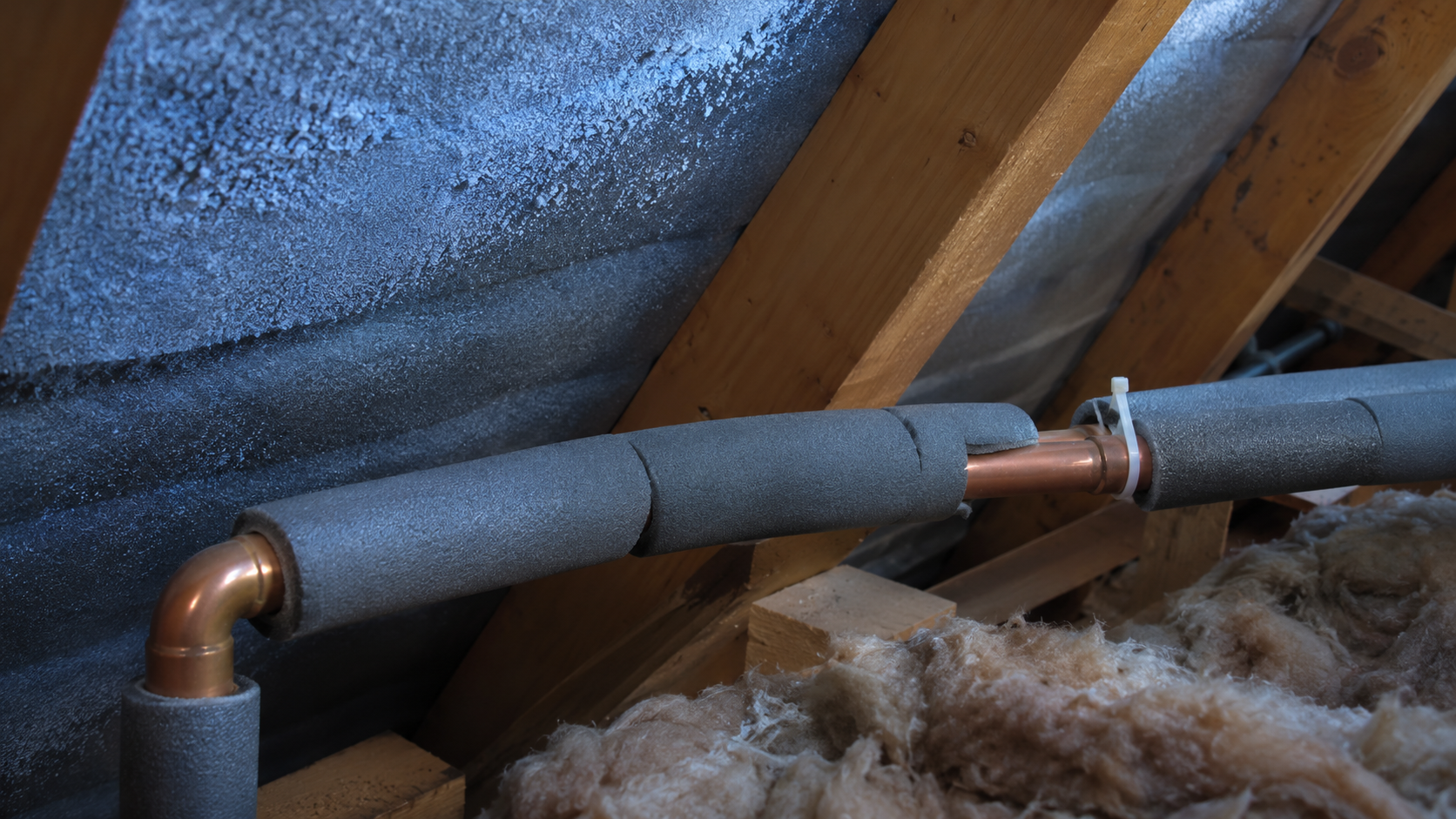
- Insulate any exposed pipework with foam lagging, particularly in the loft, garage, and under sinks against outside walls
- Keep your heating on low, even overnight and even when you’re away, rather than switching it off completely during a cold snap
- Know where your stopcock is and check it turns freely, so you’re not fighting a stiff valve in an emergency
- Fix draughts around pipework, since cold air getting into a loft or under-floor space is often what tips a borderline pipe into freezing
- Disconnect and drain outside hoses, and insulate outdoor tap fittings if you can’t remove them entirely
- Let a cold tap drip very slightly during the sharpest cold snaps if a pipe has frozen before, since moving water is less likely to freeze solid
None of these need a plumber to do. They’re the kind of thing worth doing on a dry Saturday in October or November, well before the temperature actually drops.
What to do if a pipe has frozen, but not burst
If water’s not coming through a tap, or it’s just a trickle, you’ve likely got a frozen section rather than a burst one. First, turn off the water supply to that pipe if you can isolate it, then open the affected tap so water can flow once the ice clears.
Gently warm the pipe with a hairdryer on a low setting, a hot water bottle, or a towel soaked in warm water, working from the tap end back toward the blockage. Never use a naked flame, a blowtorch, or anything that heats the pipe too quickly, since a fast temperature change is exactly what causes a split.
If you can’t find the frozen section, it’s buried in a wall or under a floor, or the pipe has already cracked, that’s the point to call in a plumber rather than keep working at it yourself.
What if the pipe has already burst?
Turn off your stopcock immediately, that’s the single most useful thing you can do. Then open the taps fed by that pipe to drain the remaining water out of the system, and switch off electrics near any water if there’s any risk of it reaching sockets or the fuse board.
From there, it’s a case of getting a plumber out as soon as possible. A burst pipe left running can cause serious damage in a short space of time, so it’s worth treating it as urgent rather than waiting to see how bad it gets. If it’s specifically your boiler’s condensate pipe that’s frozen rather than general pipework, that has its own fix, covered in our guide on what to do if your condensate pipe is frozen.
Frequently asked questions
Can I use a hairdryer to thaw a frozen pipe?
Yes, on a low setting and kept moving along the pipe. It’s one of the safer DIY options. Avoid anything with a naked flame.
How long does it take for a pipe to freeze?
An exposed, uninsulated pipe can freeze in just a few hours during a hard frost, which is why insulating them ahead of winter matters more than trying to react once the cold arrives.
Is a frozen pipe an emergency?
Not usually on its own, but if it’s already split or burst, it can flood a property fast. Turn off the stopcock and get a plumber out straight away in that situation.
Getting your home winter-ready
A little prevention now saves a lot of disruption later, and it’s often worth pairing pipe insulation with a check of your central heating system before the cold really sets in, since a heating system that’s working properly is one of the best defences against frozen pipes in the first place.
We help homeowners and landlords get ahead of winter across Reading, Maidenhead and the surrounding areas. If a pipe’s already given you trouble, or you’d rather have someone check things over before it does, get in touch and we’ll get it sorted.