



Blocked drains are one of those problems that always seem to happen at the worst possible time. It might be the kitchen sink refusing to empty on a Sunday night or a shower tray filling up while you are getting ready for work. As a domestic plumber, I get called out to this sort of thing every week across Berkshire and the surrounding areas. The good news is that most blockages build up slowly and can be prevented if you know what to look for.
In this guide, I will run through the most common causes of blocked drains, how to spot the early warning signs and what you can realistically do yourself before picking up the phone.
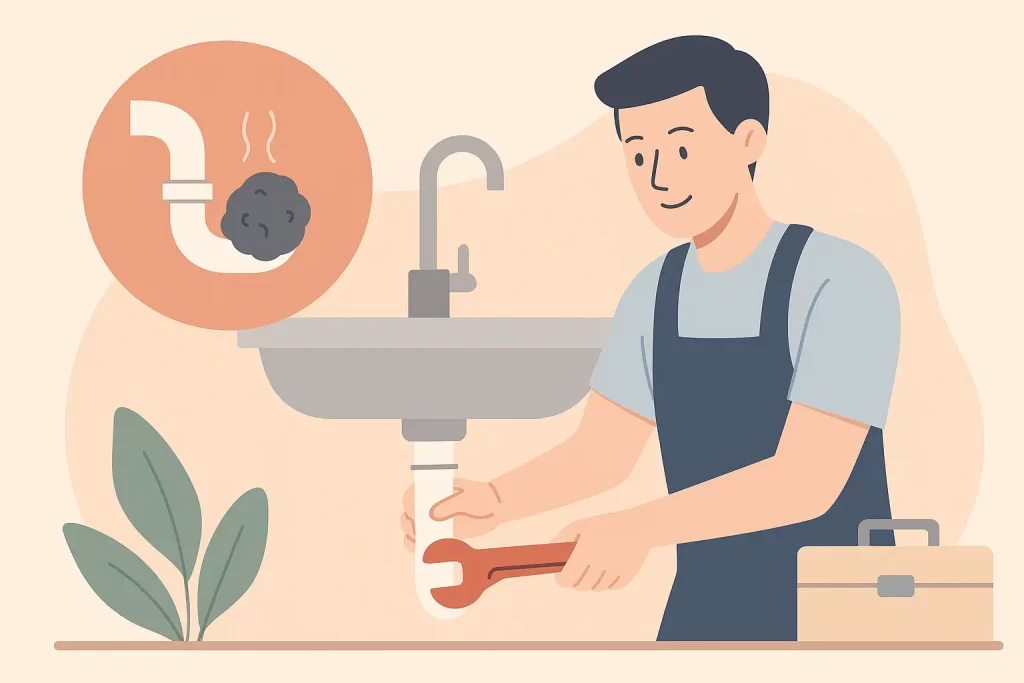
Main causes of blocked drains
Let us start with what tends to cause the trouble in the first place. In most homes it is not one big item, but a gradual build-up over time.
Grease and fat in kitchen sinks
This is easily the biggest culprit in kitchens. Cooking oil, fat from bacon, gravy and food scraps all get rinsed down the sink. It might go down as a liquid, but once it cools inside the pipework it solidifies and sticks to the pipe walls. Over months, that narrow 40mm waste pipe can become surprisingly restricted.
I have taken apart traps under sinks in places like Chobham and found them almost completely closed up with grey, waxy sludge. The homeowner often says, “But we always rinse with hot water.” Unfortunately, hot water only pushes the problem further along before it sets hard again.
Hair and soap in bathrooms
In showers and baths, hair is the main issue. It tangles up in the waste and combines with soap residue to form a stubborn clump. Over time, that clump catches more debris and slows the flow.
If you have a household with long hair, you will notice this more quickly. It is especially common in upstairs bathrooms where the pipe runs are longer and have a few bends.
Foreign objects
Wipes, cotton buds, sanitary products and even excessive toilet paper regularly cause blockages. Even products labelled as flushable can create problems, particularly in older drainage systems around Farnborough where pipe gradients are not always perfect.
A toilet should really only be used for the three Ps: pee, poo and paper. Anything else increases the risk of a blockage further down the line.
Tree roots in outside drains
If the blockage is affecting multiple fixtures or you notice issues outside, tree roots may be involved. Roots naturally seek out moisture and can enter tiny cracks in underground pipes. Once inside, they expand and trap debris.
This is more common in older properties with clay pipework. I have seen it several times in larger gardens where mature trees sit close to the drainage run.
How to identify early warning signs
Most blockages give you a few hints before things come to a complete standstill.
- Water draining away more slowly than usual
- Gurgling sounds from plugholes or toilets
- Unpleasant smells coming from sinks or shower trays
- Water backing up in another fixture when you run a tap
Slow drainage is usually the first sign. If your kitchen sink is taking longer to empty than it did a month ago, do not ignore it. Acting early can save you from a full blockage and potential water damage.
Practical fixes and when to call a professional plumber
There are a few simple steps you can try before calling for help. Just be realistic about what DIY can achieve.
Boiling water and washing up liquid
For minor grease build-up, carefully pouring boiling water mixed with washing up liquid down the sink can help break down fresh deposits. It will not cure a fully blocked pipe, but it can improve flow if caught early.
Plunger
A basic sink or toilet plunger is often effective. Make sure you create a good seal and use steady, firm pumps. In many cases this is enough to shift a localised blockage in the trap.
Cleaning the trap
Under most sinks you will find a U-bend. Placing a bucket underneath and unscrewing it to remove debris is straightforward if you are comfortable with basic DIY. Just check the washers are seated properly when you refit it to prevent leaks.
If the blockage keeps returning, affects several drains or involves outside manholes, it is time to call a professional. We use proper drain rods and sometimes CCTV surveys to see exactly what is going on underground. Guesswork often makes things worse.
For local advice, you can find area specific plumbing support in places such as Chobham and Farnborough.
Preventative tips to keep your drains clear long-term
Prevention is always cheaper and less stressful than an emergency call-out.
- Dispose of cooking fat in the bin once cooled, not down the sink
- Use sink strainers to catch food waste and hair
- Avoid flushing wipes and hygiene products
- Run hot water through kitchen sinks after heavy use
- Have older drainage systems checked periodically
It is also worth lifting outside drain covers once or twice a year to make sure water is flowing freely. If you notice standing water, that is an early warning sign worth investigating.
Most customers I visit say the same thing: “I wish we had dealt with it when it first started gurgling.” A small job is usually quick to sort. Left too long, it can turn into damaged pipework or internal flooding.
Blocked drains are a common household issue, but they are rarely random. With a bit of awareness and some simple habits, you can significantly reduce the risk. And if things do get out of hand, the team at Bracknell Plumbing and Heating are always happy to offer straightforward advice. Contact us today to get a quote or arrange a professional drain inspection and keep your plumbing running smoothly.