



Most electrical call outs we attend could have been avoided with a bit of early action. From sockets that suddenly stop working to lights that trip the whole house, the problems are usually similar from one property to the next. Good electrical Fault finding is about understanding why these issues happen in the first place and spotting the warning signs before they become urgent.
If you own a home, rent out a property or manage a small business in Bracknell, Wokingham or Camberley, knowing the common causes of electrical faults can save you disruption and in some cases real danger. Below are the issues we see time and time again, along with practical steps you can take to reduce the risk.
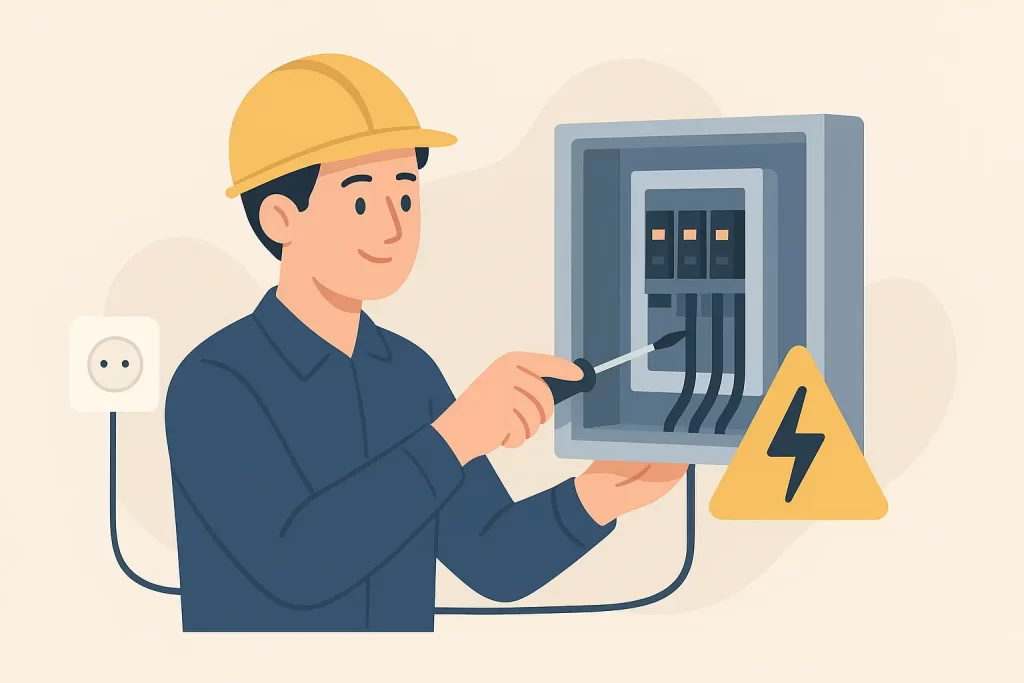
The most frequent electrical issues in homes and businesses
Tripping consumer units
A circuit breaker that keeps tripping is one of the top reasons people call an electrician. It is usually down to one of three things: an overloaded circuit, a faulty appliance or a wiring fault.
Kitchens are a common culprit. Kettles, microwaves and washing machines all drawing power at once can push a ring main beyond what it is meant to handle. In small offices, portable heaters under desks in winter often cause the same issue.
If the breaker trips the moment you plug a particular appliance in, that appliance is likely the problem. If it trips randomly, especially during damp weather, it may point to a deeper fault that needs proper testing.
Dead sockets or lighting circuits
Another regular call out is a socket or lighting circuit that suddenly stops working. Sometimes it is a loose connection behind the faceplate. Other times it can be a failed junction box in a loft, which we often find buried under insulation.
In older properties around Bracknell and Wokingham, we still come across ageing wiring where connections have simply worn over time. Aluminium wiring or older rubber insulated cables can become brittle and unreliable.
Flickering or dimming lights
Flickering lights are often dismissed as minor but they can indicate loose wiring or voltage fluctuations. With modern LED fittings, incompatible dimmer switches are a common cause. I have lost count of how many times we have swapped out an old halogen dimmer for an LED compatible one and solved the issue immediately.
If lights dip when heavy appliances start up, that can suggest the circuit is struggling with demand. In a small retail unit in Camberley, we recently found the lighting and back office sockets were sharing a circuit that really should have been split.
Burning smells or discoloured sockets
This is one you should never ignore. A faint burning smell or brown marks around a socket normally means heat build up. That is usually caused by loose terminals or overloaded plugs.
I have attended properties where a simple loose connection behind a socket had been quietly overheating for months. Left long enough it could easily have led to a fire.
Outdoor electrical faults
Garden lighting, outdoor sockets and garage supplies are frequent problem areas, especially after heavy rain. Water ingress into fittings or cable joints is common. In places like Camberley where we see a mix of older homes and newer garden offices, poorly sealed connections are a regular issue.
If your RCD trips during or after wet weather, outdoor electrics should be high on the list of suspects.
How to prevent common electrical faults and improve safety
While not every fault can be predicted, there is plenty you can do to reduce the chances of an unexpected breakdown.
- Avoid overloading sockets. High powered appliances such as kettles, tumble dryers and portable heaters should ideally have dedicated outlets.
- Do not rely on extension leads as a long term solution. They are handy short term but often become permanent and overloaded.
- Check for early warning signs such as buzzing, warmth around sockets or regularly tripping breakers.
- Keep outdoor fittings well maintained and ensure any additions are properly weatherproof.
- Arrange periodic electrical inspections, especially if your property is over 20 years old or you are a landlord.
Landlords in particular should stay on top of Electrical Installation Condition Reports. I often get asked if they are really necessary when “everything seems fine”. The reality is many issues sit quietly behind walls and consumer units for years before showing obvious symptoms.
For small business owners, think about how your equipment has changed over time. Extra computers, coffee machines or heaters all add load to circuits that may not have been designed for them.
When to call a professional electrician and what to expect
If you are resetting a breaker more than once, noticing burning smells or dealing with partial power loss, it is time to call a professional. Electrical systems are not an area for guesswork.
A proper visit should include systematic testing, not just replacing the most obvious part. Fault finding involves checking circuits, insulation resistance, earthing arrangements and load levels to pinpoint the exact cause. In many cases the visible issue is just the symptom.
When we attend properties locally, whether in a family home in Wokingham or a small unit in Bracknell town centre, the first step is always to make the installation safe. Then we explain clearly what has failed, why it has happened and what the options are.
One honest bit of advice: if you are planning renovations or adding high demand appliances such as EV chargers or electric showers, have your system assessed first. Upgrading in a controlled way is far better than reacting to repeated breakdowns.
Electrical faults are common but they are rarely random. There is almost always a reason behind them, whether it is age, load or environmental wear. With regular checks and a bit of awareness, most serious issues can be avoided.
If you would like peace of mind or are dealing with ongoing electrical problems, the team at Bracknell Plumbing and Heating can help. Contact us today to arrange a professional electrical inspection or get in touch for a fast, no-obligation quote.