



Nobody thinks about the stopcock until water is coming through the ceiling. Your internal stopcock is usually under the kitchen sink. If it’s not there, check a downstairs toilet, a utility room, an airing cupboard, or where the water pipe comes up through the floor near the front of the house. Turn it clockwise to shut the water off. If you’ve got a leak right now and can’t stop it, call us on 01344 851023 for emergency plumbing help around Bracknell.
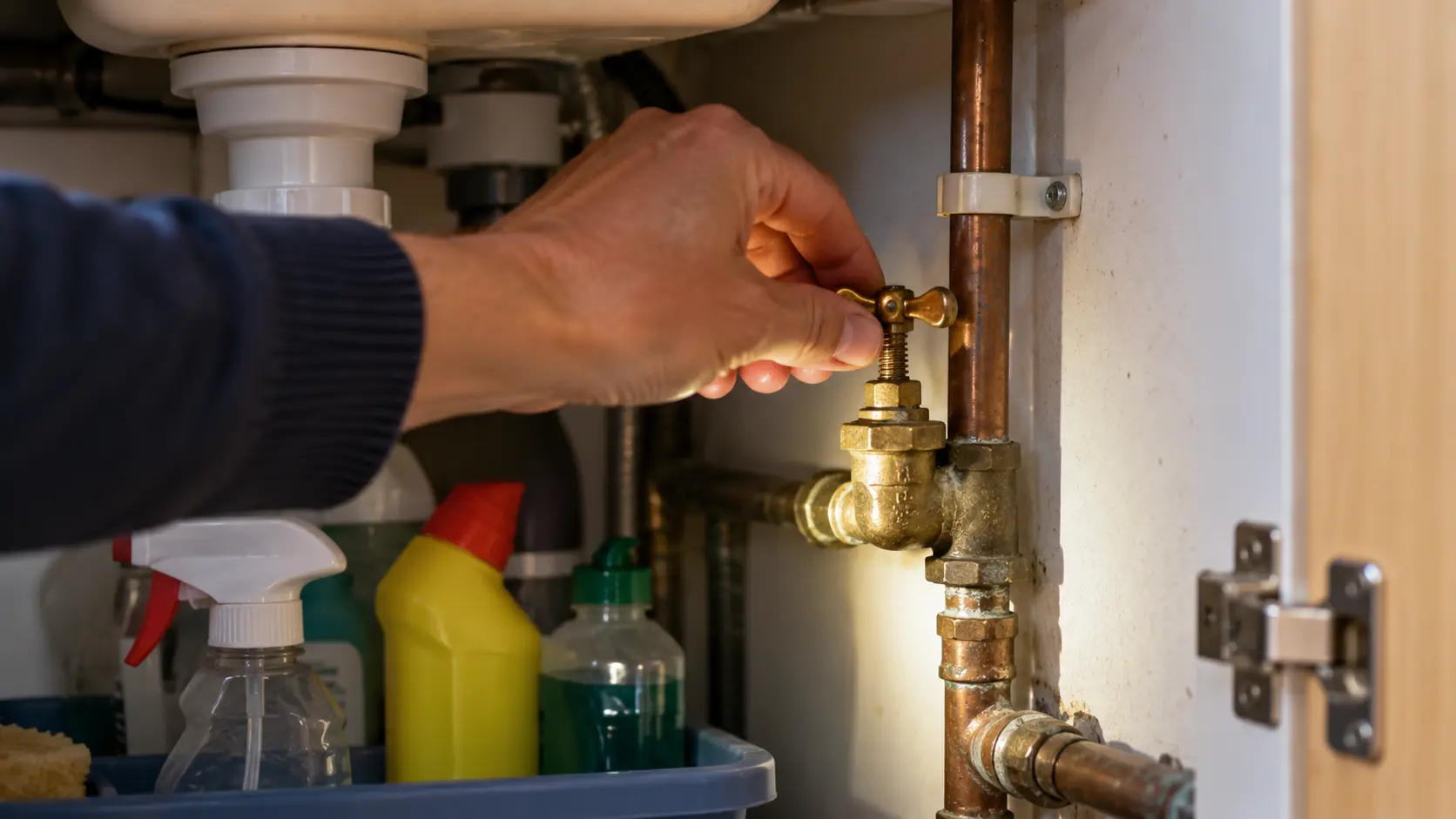
What a stopcock does
The stopcock (also called a stop valve or stop tap) controls the mains cold water coming into your home. Turn it off and no fresh water can flow in. That stops a burst or leaking pipe on the mains side from getting worse while you wait for help.
There are usually two:
- The internal stopcock, inside your home, which is the one you control
- The outside stop tap, usually under a small cover in the pavement or front garden, which belongs to the water company
In an emergency, the internal one is the one to use.
Where to look
Stopcocks tend to sit where the mains pipe enters the house. Common spots are:
- Under the kitchen sink, behind the bleach and bin bags
- In a downstairs toilet or cloakroom
- In a utility room or garage
- Under the stairs
- In an airing cupboard, in some flats
- Under floorboards near the front door, in some older homes
In flats, the stopcock may be in a communal cupboard or corridor. It’s worth asking your management company where yours is.
How to turn your water off
- Turn the stopcock clockwise until it stops. Don’t force it.
- Open the cold taps to drain the water left in the pipes.
- If water is near electrics, turn the electricity off at the consumer unit, but only if it’s safe to reach.
- Turn off the heating and boiler if the leak is on hot water or heating pipework.
- Call a plumber.
On homes with a cold water tank in the loft, turning off the mains stops the tank refilling, but water already in the tank can keep feeding some taps. Opening the bath taps helps drain it faster.
What if the stopcock won’t turn?
Stopcocks that haven’t been touched for years often seize. If yours won’t budge:
- Don’t use a wrench or hammer on it, as you could snap the spindle or damage the pipe
- Try a little more pressure by hand, with a cloth for grip
- If it still won’t move, call a plumber, and consider the outside stop tap only if you have the right key and it’s safe to reach
A seized or leaking stopcock is worth replacing before you ever need it. It’s a quick job for a plumber and could save a lot of damage later.
Test it once or twice a year
The best time to find your stopcock is when nothing’s wrong. Once or twice a year:
- Turn it off, check the kitchen cold tap stops running, then turn it back on
- Don’t turn it fully open against the stop; back it off a quarter turn to help stop it seizing
- Label it and make sure everyone in the house knows where it is
It’s also worth knowing the signs of a hidden water leak so you catch problems early.
Stopcocks in Bracknell homes
Many of Bracknell’s newer estates have the stopcock under the kitchen sink, but in older properties around Wokingham, Binfield and Crowthorne it can be tucked under floorboards, behind kitchen units that were fitted later, or in an outbuilding. If you’ve just moved in, finding it should be one of the first jobs on your list.
For other plumbing problems where acting fast matters, our guide to common plumbing emergencies walks through what to do.
Frequently asked questions
Which way do you turn a stopcock off?
Clockwise, just like a tap. “Righty-tighty, lefty-loosey” is the easy way to remember it. Turn it until it stops, but don’t force it past that point.
Will turning off the stopcock stop the heating?
Not usually. A sealed heating system runs separately from the mains once it’s filled. If the leak is on a heating pipe, turn the boiler off and call an engineer.
Can I turn off the outside stop tap myself?
It belongs to the water company and needs a special key. In an emergency, focus on the internal stopcock first, and call a plumber or your water company if that isn’t possible.
Should I replace an old stopcock?
If it’s seized, leaking or very stiff, yes. A working stopcock is your first line of defence against water damage.
Can’t find it, or it won’t turn?
Give us a call on 01344 851023 or drop us a message and we’ll come and find it, check it works and replace it if it’s past its best.