



An EICR, or Electrical Installation Condition Report, is a formal inspection of a property’s fixed electrical wiring, carried out to confirm it’s safe and identify anything that needs attention. In England, landlords are legally required to have one carried out at least every 5 years, and it’s good practice for small business owners too, even where the rules are less prescriptive. If you’re not sure whether you’re due one, or what actually gets checked, our electrical services page covers what we offer, and this guide covers the rest.
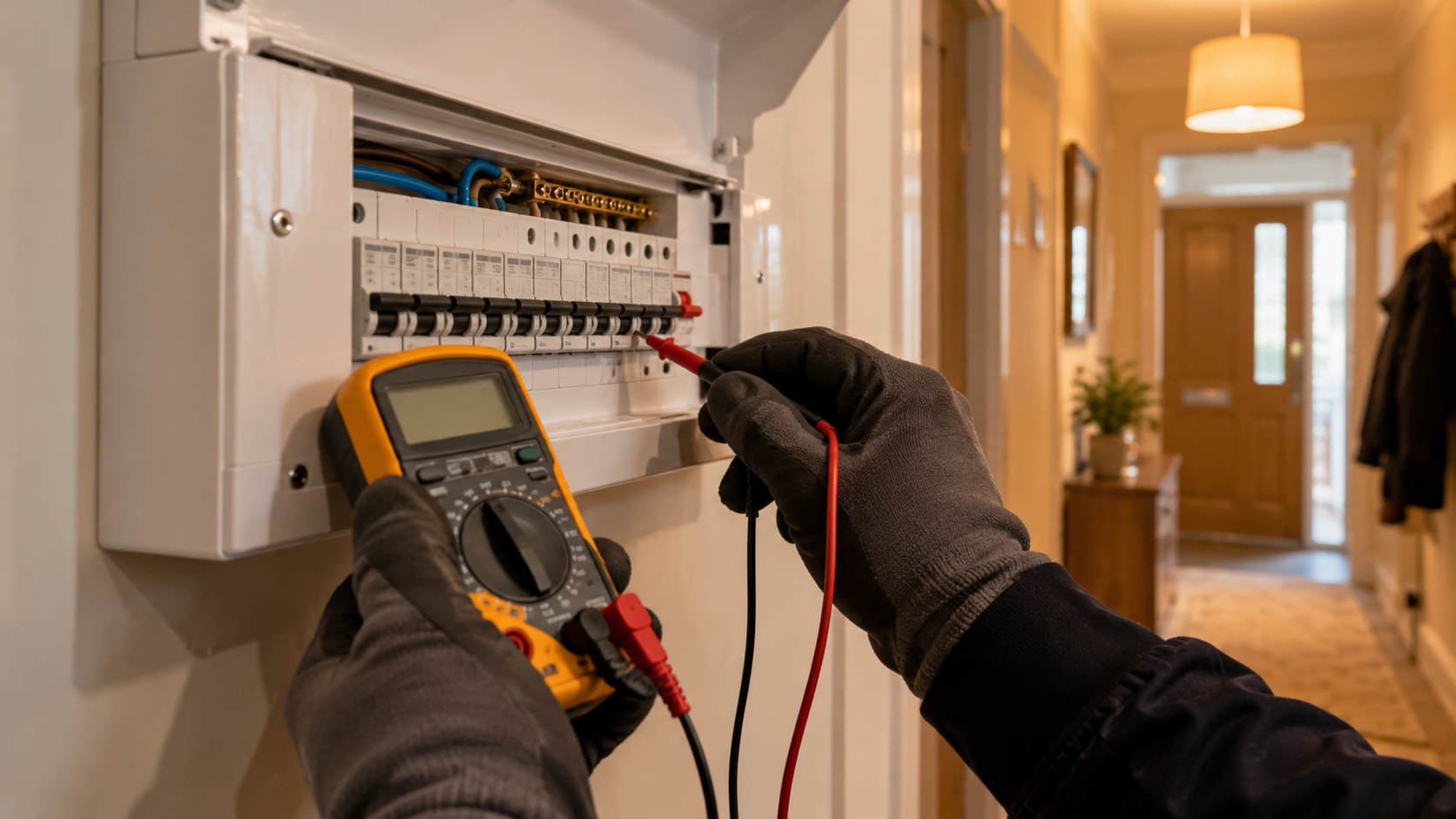
What is an EICR and what does it check?
Unlike PAT testing, which checks individual portable appliances like kettles or laptops, an EICR looks at the fixed electrical installation itself: the wiring in the walls, the consumer unit, sockets, switches, and everything that isn’t simply plugged in and unplugged. An electrician tests the whole system rather than individual items.
The inspection covers things like the condition of the wiring, whether circuits are overloaded, whether earthing and bonding are adequate, and whether the consumer unit and RCD protection meet current standards. It’s a much broader check than most people expect.
Who actually needs an EICR?
Landlords in England are required by law to have a valid EICR for every rented property, renewed at least every 5 years or at the start of a new tenancy if the previous report has expired. A copy has to be given to tenants and to the local authority if requested.
Small business owners don’t face quite the same fixed schedule, but there’s a general legal duty under health and safety law to keep electrical systems safe, and an EICR is the standard way to demonstrate that. Insurers often expect one too, particularly for commercial premises.
Homeowners aren’t legally required to have one. It’s still worth considering if you’re buying an older property, you’ve never had the wiring checked, or you simply want the reassurance that everything behind the walls is in good order.
How often is an EICR needed?
For rented properties in England, the legal minimum is every 5 years, or sooner if a previous report recommends it. Some reports come back with a shorter recommended interval if the wiring is older or shows signs of wear, so it’s not always a flat 5-year cycle.
For businesses, the right interval depends on the type of premises and how the electrics are used. A busy commercial kitchen or workshop will generally need checking more often than a quiet office. If you’re not sure what applies to your premises, it’s worth asking directly rather than guessing.
What happens during the inspection?
An EICR involves both visual checks and hands-on testing. During a typical visit, the electrician will:
- Visually inspect the consumer unit, sockets, switches and visible wiring for damage or wear
- Test circuits for correct earthing and bonding
- Check that RCD protection is present and working correctly
- Test for overloaded circuits or outdated wiring types
- Confirm the installation meets current wiring regulations
At the end, you’ll get a written report classifying anything found, rather than just a pass or fail.
What do the fault codes on an EICR actually mean?
This is where a lot of landlords get caught out, because an EICR isn’t simply “satisfactory” or “unsatisfactory.” Issues found are classified using codes:
- C1 means danger present, requiring immediate action, and it’s genuinely urgent
- C2 means potentially dangerous, requiring urgent remedial work, usually within 28 days for rented properties
- C3 means improvement recommended, but not a legal requirement to fix
- FI means further investigation needed to fully assess a specific issue
A report with a C1 or C2 code is marked unsatisfactory overall, and for landlords, that means the remedial work has to be carried out and confirmed, not just noted and left. A C3 alone doesn’t fail the report, though it’s still worth addressing.
EICR vs PAT testing: what’s the difference?
These two get mixed up constantly. An EICR checks the fixed wiring and installation itself. PAT testing checks individual portable appliances plugged into that system, like kettles, extension leads or office equipment. Most landlords and business owners need to think about both, but they’re separate checks covering different things, and one doesn’t substitute for the other.
Frequently asked questions
How long does an EICR take?
Usually a few hours for an average home, though it depends on the property’s size and number of circuits. Larger homes and commercial premises can take longer.
Does a new build need an EICR?
Not straight away. A newly completed electrical installation gets its own certification when it’s first signed off. An EICR becomes relevant later, once that installation is being reassessed, for example at a rental property’s next 5-year check.
Can I get an EICR done the same day I book?
It depends on availability, but many jobs can be turned around quickly, especially for a standard home. Worth asking directly if you’re working to a deadline like a new tenancy starting.
Getting your EICR sorted
If you’re a landlord who’s not sure when your last EICR was carried out, or a small business owner who’s never had one done, it’s worth getting ahead of it rather than waiting for it to become urgent. It’s also worth thinking about your gas safety certificate at the same time if you manage a rental property, since the two compliance checks often line up well together.
We carry out electrical safety inspections for landlords and small businesses across Berkshire. If you need an EICR booked in, get in touch and we’ll take it from there.