



If you rent out a property in Bracknell, or anywhere else in the UK, a landlord gas safety certificate isn’t optional. It’s a legal requirement, and it needs renewing every 12 months. Also known as a CP12, this certificate confirms that every gas appliance, flue and pipe in the property has been checked by a Gas Safe registered engineer and found safe to use. We carry out gas safety certificates and inspections for landlords, homeowners and small business owners right across Berkshire, so if you’re not sure whether you’re due one, or what’s actually involved, this should clear it up.
What is a landlord gas safety certificate (CP12)?
A CP12 is the record issued once a Gas Safe registered engineer has inspected every gas appliance, flue and fitting in a property and confirmed they’re all working safely. The name comes from the old “CORGI Proof 12” form, and while the industry body changed years ago, the term stuck.
It’s not a one-off. Landlords need a fresh certificate every year, and a copy has to go to tenants within 28 days of the check, or before a new tenant moves in.
Who actually needs one?
Landlords are the group this applies to most strictly. If you let out a property, whether that’s a single flat or a whole portfolio, you’re legally required to have a gas safety check carried out annually on every gas appliance and flue in the property.
Small business owners aren’t automatically off the hook either. If your premises has gas appliances such as a boiler, water heater or catering equipment, you’re likely to have similar duties to keep them properly maintained and checked. Requirements can vary depending on your setup, so it’s worth speaking to a registered engineer about what applies to your specific premises.
Homeowners don’t need one by law. That said, plenty of homeowners still book a gas safety check, usually when they’re buying or selling a property, moving into somewhere new, or simply want the reassurance that everything gas-related in the house is safe. It’s also a natural add-on if you’ve recently had a new boiler installed and want everything signed off in one visit.
What does the engineer actually check?
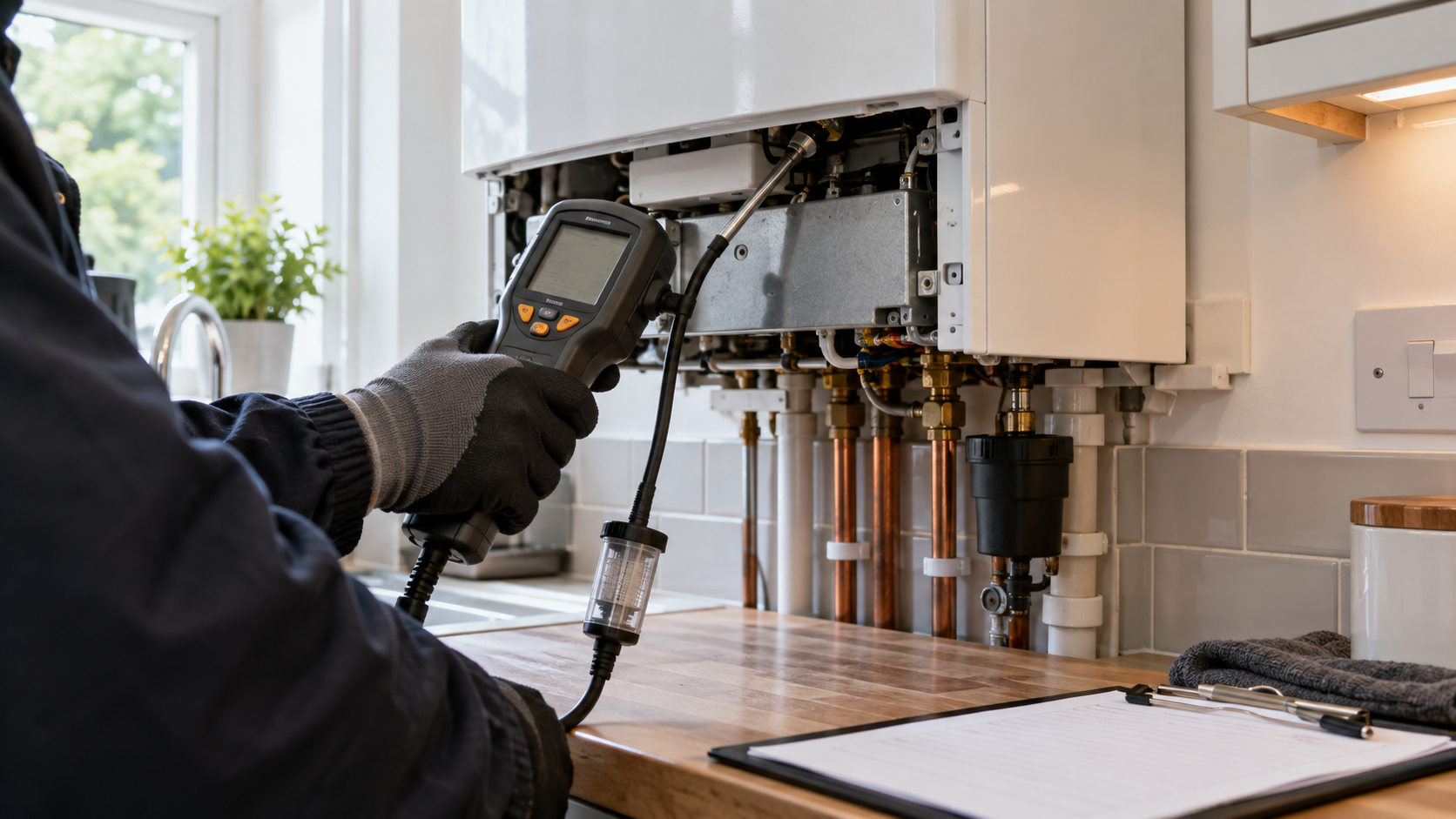
A proper gas safety check isn’t a quick glance at the boiler. During the visit, the engineer will typically check:
- Each gas appliance is operating correctly and burning gas as it should
- Ventilation is adequate for every appliance in the property
- Flues and chimneys are clear and venting safely
- The whole gas installation for leaks, using a tightness test
- Gas pressure and flow rates are within safe limits
- Safety devices, such as flame failure devices, are working properly
If anything falls short, the engineer will explain what needs fixing before a certificate can be issued. It’s far better to find this out from a routine check than during a breakdown in the middle of winter.
How often do you need one?
Every 12 months, without exception, for rented properties. Many landlords time it to coincide with a new tenancy starting or a boiler service, since an engineer is already on site checking the system anyway. If you’re managing several properties, staggering the renewal dates across the year rather than bunching them all together tends to make the admin side far less of a headache.
What happens if you don’t have one?
Letting a property without a valid gas safety certificate is a legal breach, and it can leave landlords exposed to enforcement action, invalidated insurance, and real difficulty if something ever goes wrong with a gas appliance. Beyond the legal side, it simply isn’t worth the risk. Gas appliances that aren’t checked regularly are more likely to develop faults that go unnoticed, and in rare cases those faults can be dangerous.
If you’ve let a certificate lapse, the fix is straightforward: book an engineer, get the check done, and get back on track. There’s no benefit to putting it off.
Frequently asked questions
How long does a gas safety certificate last?
Twelve months from the date it’s issued. Mark the renewal date somewhere you won’t miss it, since certificates don’t come with an automatic reminder.
Can I get a gas safety certificate the same day?
Usually, yes. As long as everything in the property passes the check, the engineer can issue the certificate on the spot once the inspection is complete.
Do homeowners need a gas safety certificate?
No, it’s not a legal requirement for owner-occupiers. It’s still a sensible thing to have, particularly around a house move or after installing a new boiler.
What’s the difference between a gas safety certificate and a boiler service?
A boiler service focuses on your boiler specifically, checking it’s running efficiently and safely. A gas safety check is broader. It covers every gas appliance in the property, boiler included, and ends with a certificate you can produce as proof of compliance.
Booking a gas safety check with Bracknell Plumbing
We carry out gas safety certificates for landlords, homeowners and small businesses across Bracknell, Wokingham and the surrounding areas. If you’re a landlord juggling renewal dates across multiple properties, it’s also worth a look at our boiler cover plans, which can take some of that admin off your plate.
Whether you need your first CP12 sorted or you’re due a renewal, get in touch and we’ll get it booked in.