



If you’ve noticed water on the floor around your toilet, a damp patch on the ceiling below or that unpleasant smell that won’t quite shift, you could be dealing with a toilet leaking waste pipe. It’s something our plumbers are regularly called out to across Bracknell, often when a small drip has quietly been causing damage for weeks.
The good news is that not every leak means a full toilet refit. In many cases it’s a joint, a seal or a section of pipe that’s shifted slightly. Below, I’ll talk you through why waste pipes leak, what you can safely check yourself and when it’s time to get us out.
Why waste pipes leak
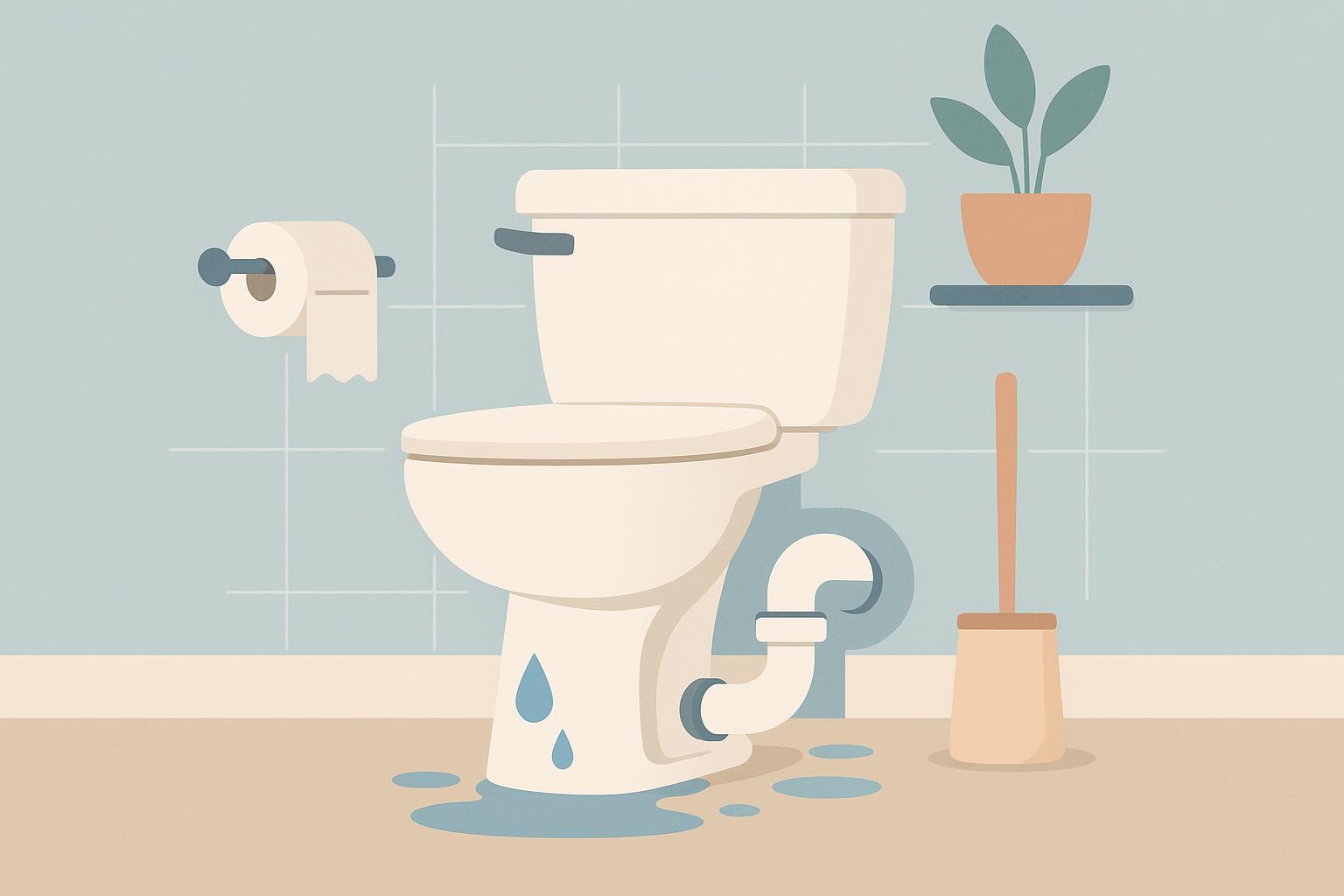
The waste pipe is the large pipe that carries water and waste from your toilet to the soil stack or drain. Unlike the pipe that feeds clean water into the cistern, this one deals with everything after you flush. It’s sealed with compression fittings or rubber connectors and over time, those seals can fail.
Worn or perished seals
The most common cause of a leaking toilet pipe at the back of the pan is a degraded rubber pan connector. This is the flexible collar joining the toilet outlet to the waste pipe. After years of use, cleaning products, movement and slight temperature changes, the rubber can harden or crack.
We often see this in homes where the toilet has shifted slightly over time. Even a few millimetres of movement can break the seal.
Loose connections
If your toilet was installed recently and you’ve got a toilet leaking waste pipe in Bracknell, it may simply be a joint that hasn’t been fully tightened. This is more common in cloakrooms or downstairs loos where space is tight and access is awkward.
Blocked waste pipe
A partial blockage can force water back through a weak seal. Customers often tell us, “It only leaks when we flush.” That’s a classic sign of pressure building in the pipe.
Cracked pipework
Older properties sometimes still have boxed-in pipework that hasn’t been inspected in years. We’ve opened up plenty in Bracknell to find hairline cracks in plastic fittings or old cast iron pipes starting to fail.
Quick DIY checks you can do safely
Before calling anyone out, there are a few sensible checks you can make. Always dry the area first so you can see fresh water appear.
- Flush the toilet and watch closely where the pipe meets the back of the pan.
- Check for drips around the joints or pooling at the base.
- Feel around the pipe connection with tissue rather than your hands to spot moisture.
- Look for staining on nearby walls or skirting boards.
If the floor feels spongy or the ceiling below is sagging, stop there and call a professional. That suggests the leak has been going on longer than you think.
One thing I’d advise against is repeatedly flushing to “test” it. If it’s leaking, you’re only making the problem worse.
Temporary fixes to limit damage
If you’ve confirmed it’s a leaking toilet pipe and you’re waiting for a plumber, there are a couple of short-term steps to reduce damage.
Turn off the water supply
You can isolate the toilet using the small valve on the supply pipe near the cistern. This won’t stop wastewater sitting in the pipe but it will stop repeated flushing.
Avoid using the toilet
It sounds obvious but in busy family homes this is often overlooked. Make sure everyone knows not to use it until it’s fixed.
Catch drips
If it’s a slow leak, place a shallow container or old towel underneath to prevent flooring damage. This is not a fix, just damage control.
What you shouldn’t do is try sealing it with bathroom silicone or tape. We’re often called after someone has done this and it makes proper repairs more difficult. Waste pipes need secure mechanical joints, not surface sealant.
When to call a plumber
Call for help if:
- The leak is steady or worsening.
- You can see water coming through the ceiling below.
- The toilet rocks or moves when you sit on it.
- You suspect a blockage deeper in the system.
- There’s a strong sewage smell.
A proper fix usually means removing the toilet, replacing the pan connector or repairing the affected section of waste pipe and resecuring everything so it’s aligned correctly. It’s not always a big job but it does need doing properly.
In flats and rental properties especially, delays can lead to damage claims from neighbours. We’ve seen small waste pipe leaks turn into plastering and flooring jobs simply because action wasn’t taken quickly.
FAQs
Is a leaking waste pipe an emergency?
If it’s actively dripping or causing damage below, yes. Even a slow leak can cause hidden rot in flooring and joists over time.
Can I still use the toilet if it’s only a small leak?
It’s not recommended. Each flush sends several litres of water through the system and if the seal has failed the leak will continue.
How long does it take to fix?
In straightforward cases, replacing a pan connector can be done in a single visit. If boxing needs removing or pipework rerouting, it may take longer.
Will I need a new toilet?
Not usually. Most toilet leaking waste pipe issues involve connections rather than the toilet itself.
Final thoughts
A toilet leaking waste pipe might seem minor at first but it’s one of those jobs that rarely improves on its own. Whether you’re a homeowner in Bracknell or a landlord managing a property in Bracknell, Wokingham, Crowthorne, Ascot, Camberley, Windsor, Maidenhead and Reading acting quickly will save you a bigger repair later.
If you suspect a leaking toilet pipe and want it sorted properly, Bracknell Plumbing deals with these issues every week and we know the common setup in local homes. Bracknell Plumbing can attend quickly, identify exactly where the problem lies and carry out a solid, lasting repair rather than a short-term patch.
If you need help, don’t wait for it to get worse. Book an emergency plumber