


Low water pressure is one of those problems that starts as a minor annoyance – a shower that trickles rather than flows, a tap that takes an age to fill the sink – and quickly becomes genuinely frustrating. The good news is that low water pressure usually has a identifiable cause, and many of them can be resolved relatively straightforwardly. If you’d rather have a professional take a look, you can find out more about our local plumbing services here. Here’s a rundown of the most common reasons your water pressure might be low and what to do about it.
Low water pressure in your home?
Book a plumber today and get your flow back to normal.
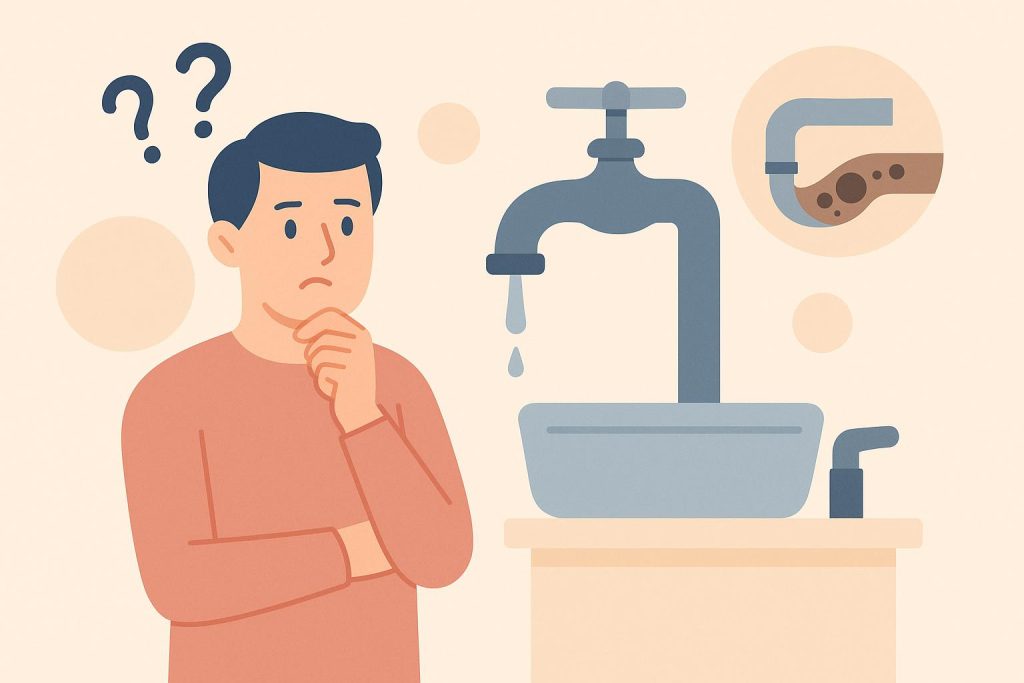
First: Is It Just Your Property or the Whole Street?
This is the first thing worth establishing. Check with a neighbour to see if they’re experiencing the same issue. If the whole street has low pressure, the problem lies with your water supplier’s mains supply rather than anything within your property – in which case you should contact your water supplier to report it and find out if there’s a known issue or ongoing work in the area.
If it’s just your property that’s affected, the cause is somewhere within your own pipework or system, and the rest of this guide will help you narrow it down.
Common Causes of Low Water Pressure
- A Partially Closed Stopcock
Your property has a main stopcock – usually located under the kitchen sink or where the mains supply enters the property – that controls the flow of water into your home. If this valve has been partially closed at some point, perhaps during a previous repair or by accident, it will restrict the flow of water throughout the whole property. It’s worth checking that it’s fully open before investigating anything else. Turn it fully anticlockwise to make sure.
There may also be a stopcock located outside your property at the boundary – sometimes called the external stop valve. If this has been partially closed by a water company operative during nearby works and not fully reopened, it can have the same effect.
- A Leak in Your Pipework
A leak somewhere in your plumbing system – whether visible or hidden behind walls and under floors – can cause a noticeable drop in water pressure. Water escaping from the system means less pressure reaching your taps and appliances. Signs of a hidden leak include unexplained damp patches on walls or ceilings, a water meter that’s moving when no water is being used, or a sudden unexplained increase in your water bill. If you suspect a hidden leak, it’s important to get it investigated promptly – left unchecked, leaks can cause significant damage to the fabric of your home.
- Limescale and Pipe Corrosion
In hard water areas – and much of Berkshire and Surrey falls into this category – limescale can build up inside pipework over time, gradually narrowing the internal diameter of the pipes and restricting flow. This tends to happen slowly, so you may not notice it until the restriction becomes quite significant. Older metal pipes can also corrode internally over time, with a similar effect. If your property has older pipework and you’ve had gradually worsening pressure over a number of years, this could well be a contributing factor.
- A Faulty Pressure Reducing Valve
Many properties have a pressure reducing valve (PRV) fitted on the mains supply – particularly in areas where mains pressure is naturally high – to regulate the pressure entering the property and protect the pipework. Over time these valves can fail or become blocked, and when they do they can actually reduce pressure too much rather than simply regulating it. If your home has a PRV and your pressure has dropped noticeably, it may need to be cleaned, adjusted, or replaced.
- Problems With Your Cold Water Storage Tank
If your property has a traditional gravity-fed system with a cold water storage tank in the loft – rather than a pressurised mains-fed system – low pressure can result from issues with the tank itself. A faulty ball valve that’s not allowing the tank to fill properly, a tank that’s too small for the property’s demand, or a significant drop in the water level in the tank can all result in poor pressure at your taps and shower. Gravity-fed systems inherently produce lower pressure than mains-fed pressurised systems, which is why many homeowners choose to upgrade to a pressurised unvented cylinder when replacing their hot water system.
- Shared Supply Pipes
In some older properties – particularly terraced houses – multiple homes share a single supply pipe from the mains. If your neighbours have added bathrooms, increased their water usage, or if the shared pipe has narrowed with age, this can result in reduced pressure for everyone on that supply. Resolving this usually involves upgrading the supply pipe, which your water supplier may contribute to in some cases.
- Peak Demand Times
If your pressure is only low at certain times of day – typically early morning or early evening – it may simply be that demand on the local mains supply is high at those times. This is a mains supply issue rather than a problem with your own plumbing, and again your water supplier is the right point of contact.
- A Failing Boiler or Pump
If it’s specifically your hot water pressure that’s low rather than cold, the issue may lie with your boiler or the pump circulating water through your system. A worn pump that’s losing efficiency, a partially blocked heat exchanger, or a faulty diverter valve on a combi boiler can all cause reduced hot water pressure even when cold water pressure is fine. This would need a heating engineer to investigate.
What Can I Do to Improve My Water Pressure?
Depending on the cause, there are several options:
If the issue is a partially closed stopcock, simply opening it fully may be all that’s needed. If the problem is limescale in older pipework, re-piping the affected sections with modern copper or plastic pipe will restore full flow. A faulty PRV or ball valve can be replaced relatively quickly by a qualified plumber. For properties with gravity-fed systems that consistently struggle with pressure, upgrading to a pressurised unvented hot water system or installing a pump on the shower can make a dramatic difference to everyday comfort.
In some cases, a booster pump can be fitted to increase mains pressure entering the property – though this needs to be done correctly and in line with your water supplier’s regulations.
When Should I Call a Plumber?
You should call a qualified plumber if:
- Your pressure has dropped suddenly rather than gradually
- You suspect a hidden leak
- You’ve checked the stopcock and pressure is still poor
- Only hot water pressure is affected
- You’ve noticed damp patches, an unexplained rise in your water bill, or your water meter moving when no water is in use
- The low pressure is affecting multiple outlets throughout the property
Low water pressure that’s left uninvestigated can sometimes be a symptom of a more significant underlying issue – so it’s always worth getting it properly diagnosed rather than simply putting up with it.
Local Plumbing Services Across Berkshire and Surrey
At Bracknell Plumbing & Heating, our qualified plumbers are experienced in diagnosing and resolving low water pressure across all types of properties – from older gravity-fed systems to modern pressurised installations. We provide honest, transparent advice and clear quotes before any work begins, with no hidden fees.
We provide plumbing services across the local area, including Ascot, Binfield, Bagshot, Blackwater, Bracknell, Chobham, Crowthorne, Finchampstead, Henley, Lightwater, Sandhurst, Sunningdale, Virginia Water, Winkfield, Woodley, Yateley, Wokingham, Camberley, Farnborough, Maidenhead, Reading, Slough, and Windsor.
> Call us on 01344 851023 or book an appointment online – we’re here 24 hours a day.